2026 IDSov & IDGov Summit ReCap
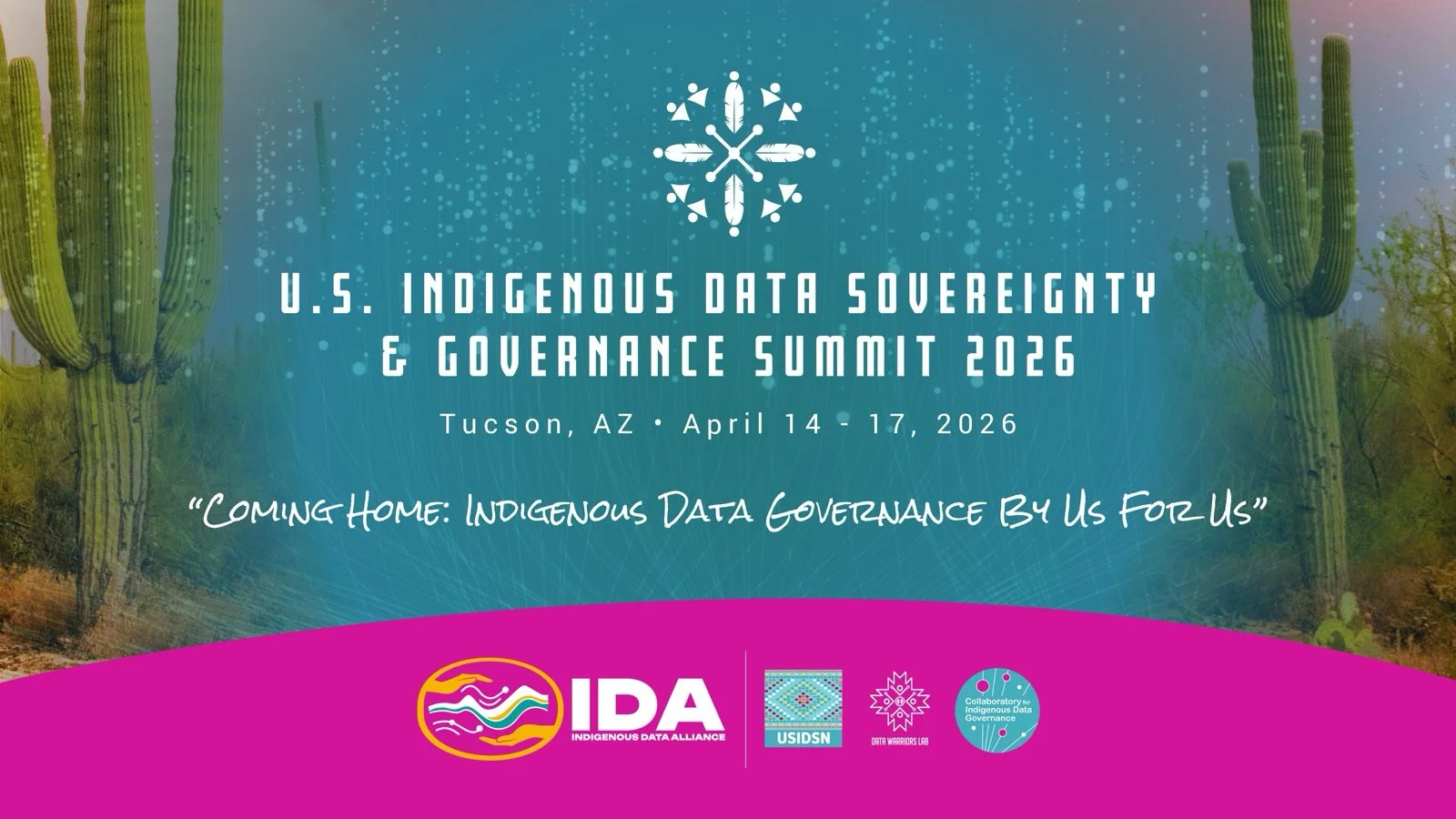
The 2026 United States Indigenous Data Sovereignty (IDSov) & Indigenous Data Governance (IDGov) Summit convened more than 500 people on the lands of the Pascua Yaqui Tribe and the traditional homelands of the Tohono O’odham Nation from April 15–17, with a day of pre-Summit activities on April 14.
This year’s theme, “Coming Home: Indigenous Data Governance By Us For Us,” included four days of events in which Indigenous individuals and allies came together to share data stories and strategies for strengthening IDGov.
This year’s Summit included elders and youth whose perspectives and teachings grounded the gathering in intergenerational kinship, meaningful conversation, and a shared responsibility to future generations. Their presence helped create a space where discussions of IDSov and IDGov remained rooted in community, with a focus on making decisions and building sustainable systems to benefit present and future generations. Ten elders and ten students participated throughout the gathering, providing opportunities for intergenerational dialogue and relationship-building.
The Summit also welcomed a delegation of local Indigenous high school students from Ha:sañ Preparatory & Leadership School who attended sessions and shared their insights during an official youth plenary panel.
Pre-summit events on April 14th included an IDSov Masterclass and Tribal Leaders Forum. The sold-out Masterclass, led by Professor Cheryl Ellenwood, was attended by more than 100 individuals spanning Tribes and Indigenous communities, universities, data repositories, nonprofit organizations, and more. Participants received a certificate of completion following the day-long training, which covered foundational concepts in IDSov and IDGov, then dove into topics and case studies focused on IDGov Frameworks, Relational Infrastructures, and Growing Data Warriors.
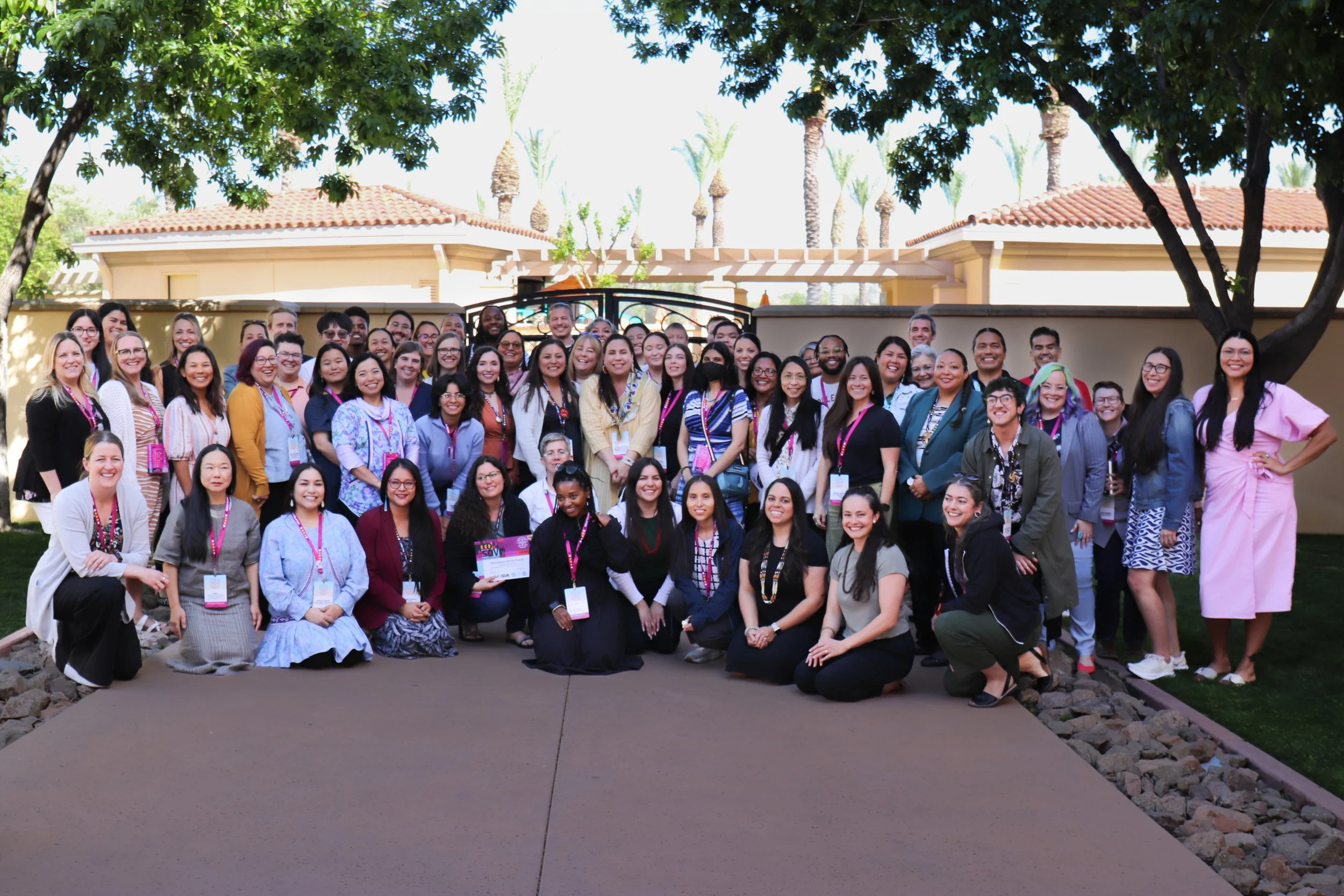
Participants following the completion of the IDSov Masterclass.
The Tribal Leaders Forum was held concurrently with the Masterclass and brought together 40 Indigenous leaders from across the United States - including Alaska, Hawaii, and U.S. territories - and New Zealand. Through presentations and discussions led by IDSov practitioners, participants explored Tribally-specific data governance frameworks, AI and data governance efforts across Māori communities, opportunities to implement sovereign data infrastructures, and Tribal perspectives on artificial intelligence.
Tribal leaders identified the following priorities for strengthening IDSov and IDGov efforts within their communities: 1) access to foundational education and training on IDSov, IDGov, and artificial intelligence; 2) guidance on enforcing IDGov protocols and procedures beyond Tribal territories; 3) practical roadmaps and implementation pathways for achieving absolute IDSov; 4) workforce development and capacity-building models to train and support Indigenous data practitioners from within their communities; and 5) funding strategies for IDSov development.
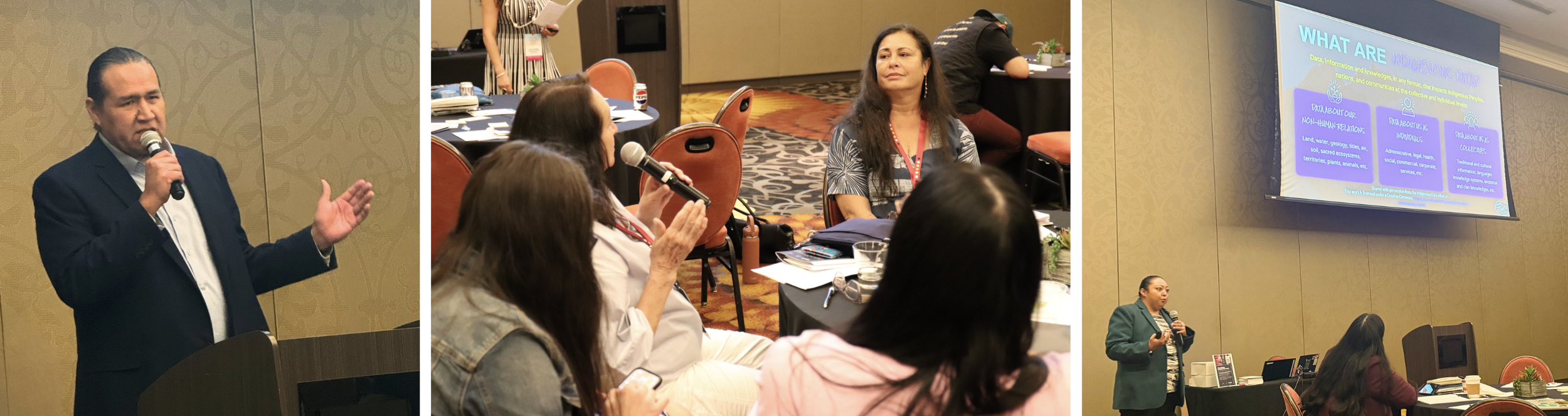
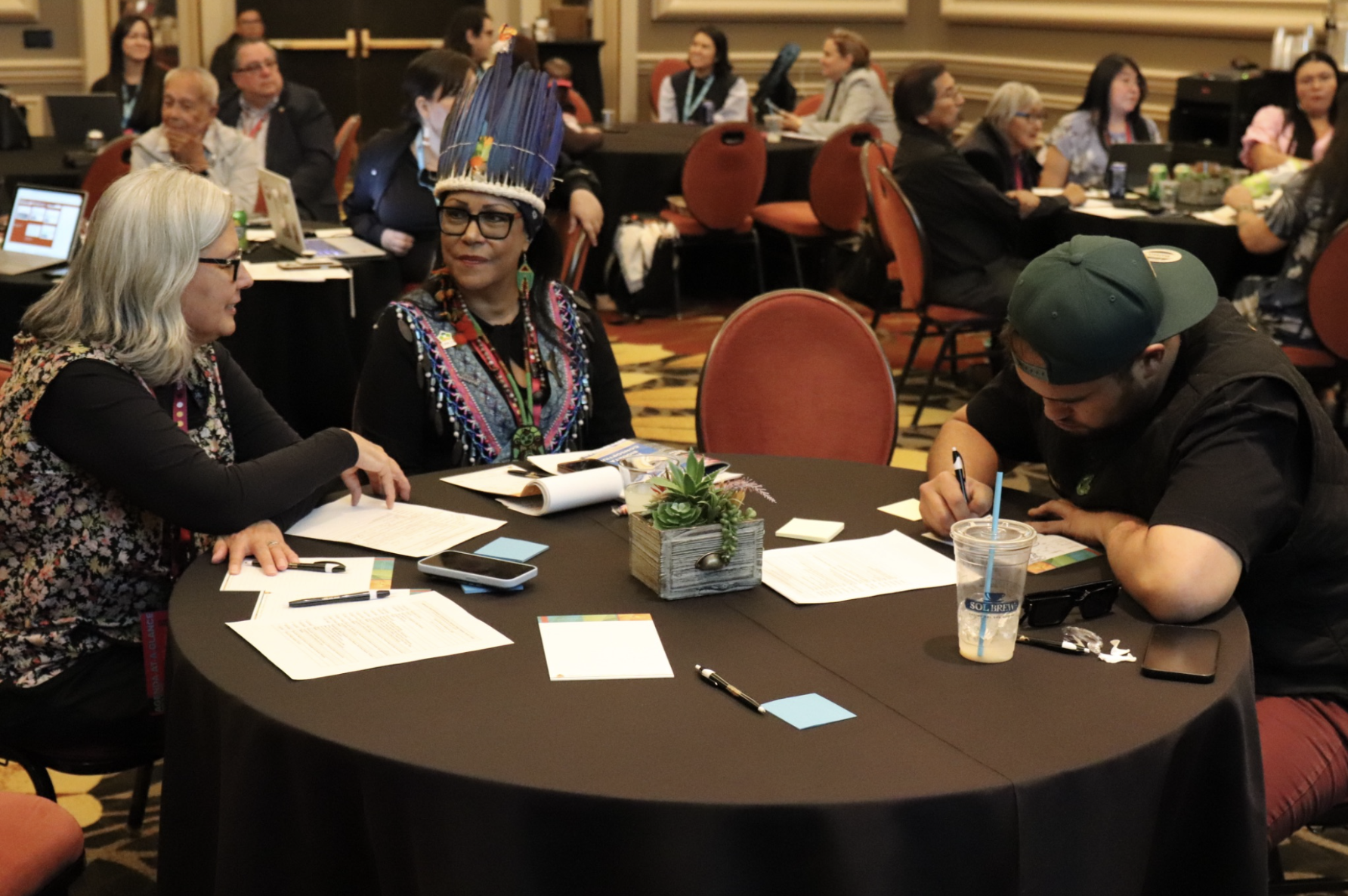
Tribal Leaders Forum participants reflect on their summit experience, their work in IDSov/IDGov, and the path forward.
CARE Directs Us HomeThe first day of the Summit opened on April 15 with a welcome message from Indigenous Data Alliance’s co-directors Dr. Stephanie Carroll, Dr. Desi Small-Rodriguez, and Dr. Riley Taitingfong and a blessing from representatives of the Pascua Yaqui Tribe and the Tohono O’odham Nation - whose ancestral lands comprised the location of the Summit. A plenary panel, “Indigenous Data Governance Considerations for Artificial Intelligence,” featured three esteemed speakers with collective expertise in Tribal leadership, IDSov, data ethics, bioethics, and law.
Structured thematically around each of the four CARE Principles for IDGov day 1 of the Summit consisted of 48 oral sessions (largely structured as individual presentations with slides) and 15 round tables (structured more as workshops or facilitated discussions with attendees).
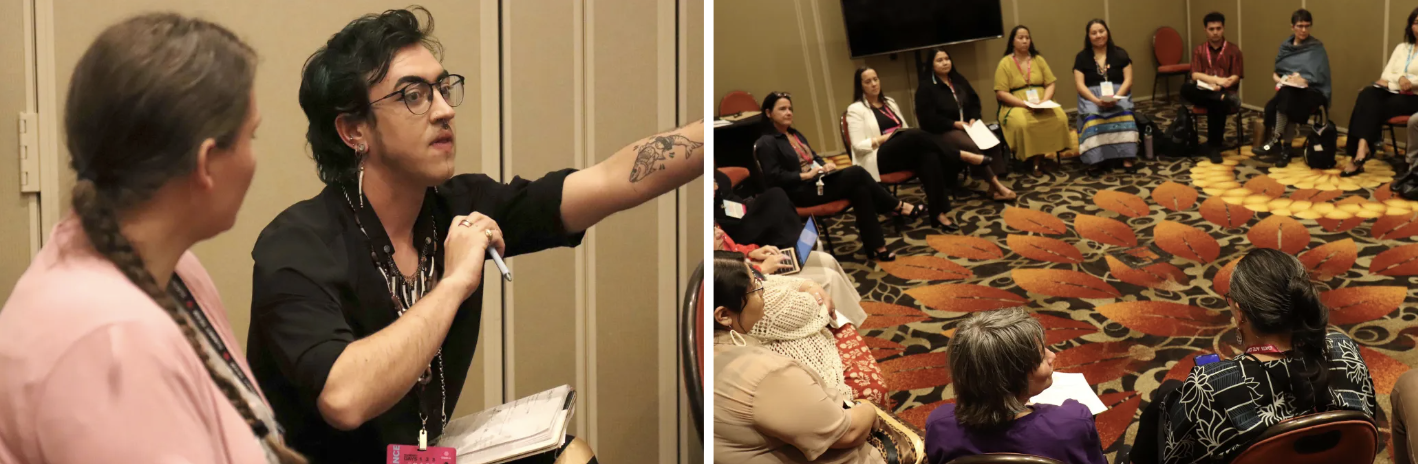
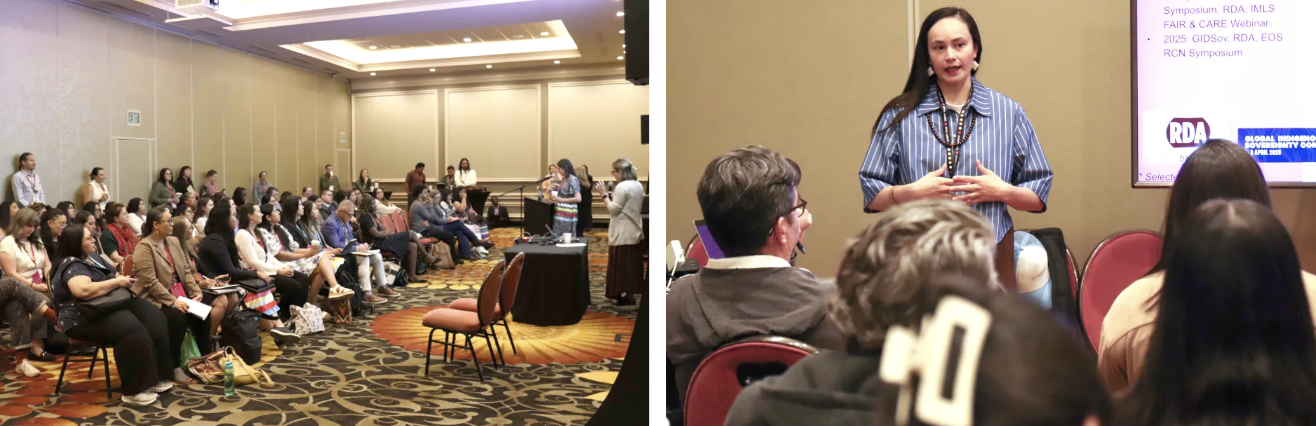
A resounding question heard throughout the day was ‘how can Indigenous communities move beyond ethical framing of data closer towards legal accountability?’ Existing tools shared with attendees include Tribal resolutions on data sovereignty, supporting measures and resources from national Tribal organizations, Tribal-state policies, and the Institute of Electrical and Electronics Engineers (IEEE) 2890-2025 Recommended Practice for the Provenance of Indigenous Peoples’ Data standard which has applications in an array of disciplines from publishing protocols, research standards, and governance of emerging technologies. Summit presenters’ names and abstracts are publicly available.
Day 1 concluded with a Gala dinner event that recognized Summit sponsors, and honored three Data Warrior awardees. These awards were established by the U.S. Indigenous Data Sovereignty Network (USIDSN) in 2024 in memory of key leaders in the IDSov movement who have now become ancestors. Hannah-Marie Ladd received the Indigenous Data Warrior Community Award, in honor of Nicole “Nikki” Ducheneaux; Dr. Alec Calac received the Indigenous Data Warrior Student Award, in honor of the Honorable Joe Garcia; and Dr. Dick Todd received the Data Warrior Ally Award in honor of Mr. Norm DeWeaver. Northern Cheyenne Elder, Conrad Fisher and his grandson VoShay Gray, the youngest fluent Cheyenne language speaker, along with Northern Cheyenne graduate student Xavier Littlehead sang a powerful honor song to acknowledge the award recipients. The gala also featured Marina Zafiris (Mohawk of Akwesasne), who took to the stage as plenary speaker with a talk focused on community strategies for resisting colonial surveillance and forging sovereign computational infrastructure.
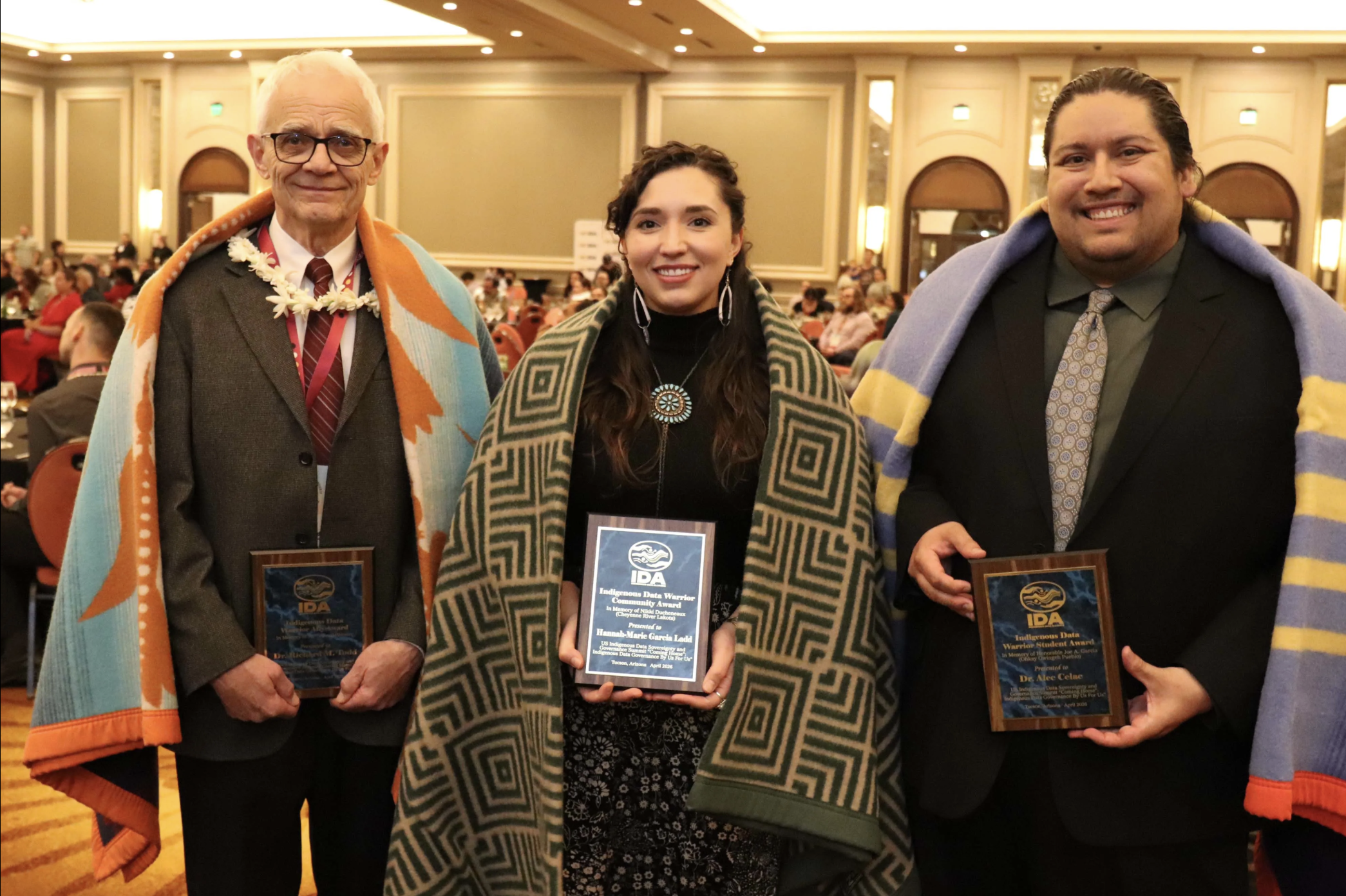
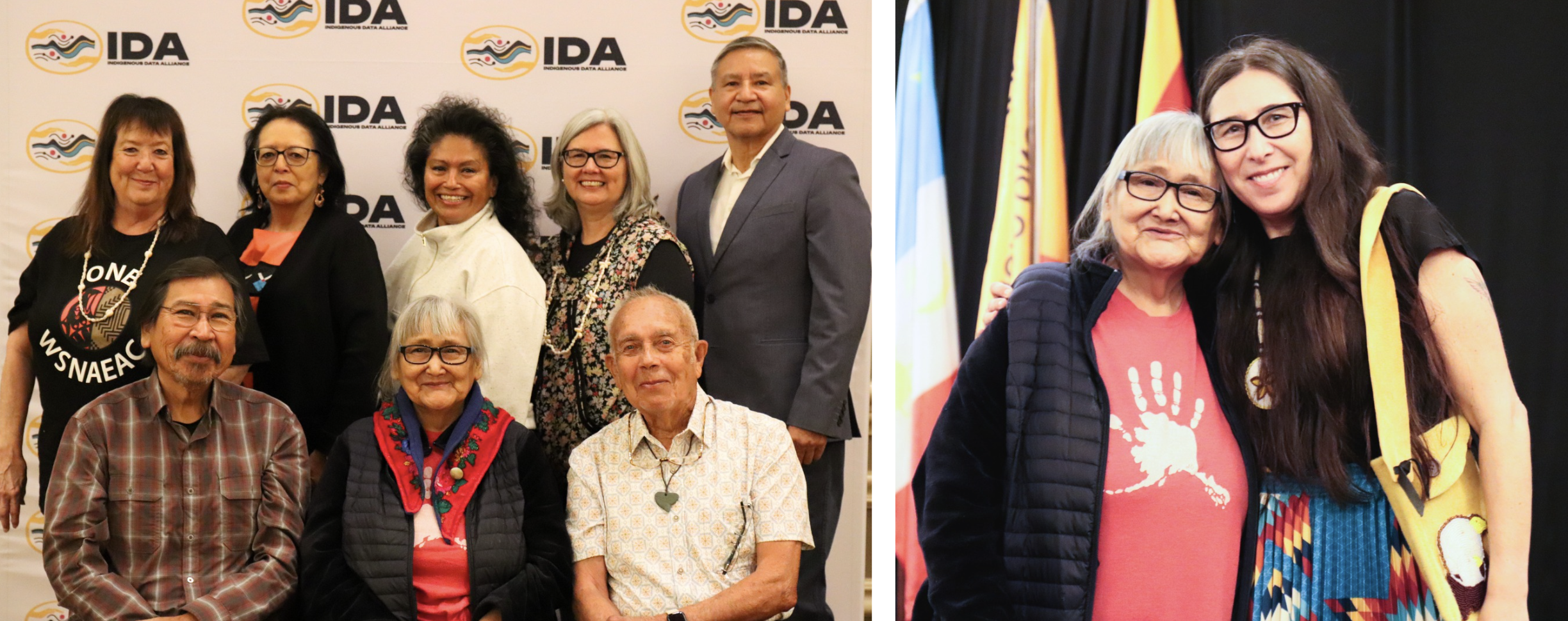
Left to right: Dr. Dick Todd, Data Warrior Ally Awardee; Hannah-Marie Ladd, Indigenous Data Warrior Community Awardee; and Dr. Alec Calac, Indigenous Data Warrior Student Awardee.
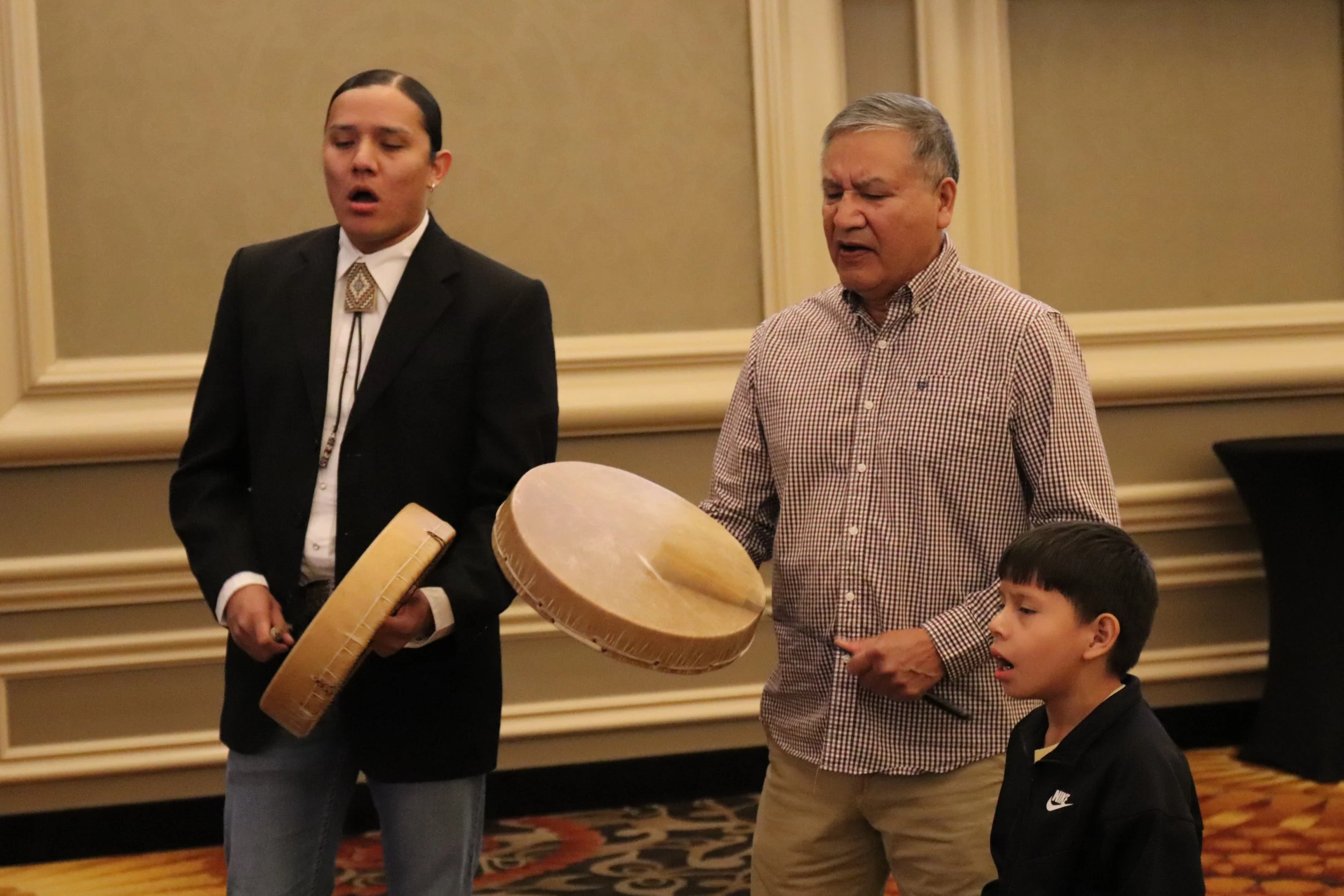
Left to right: Xavier Littlehead, elder Conrad Fisher, and grandson VoShay Gray singing an honor song.
By Us for UsThe second day of the Summit was dedicated to amplifying and exchanging IDGov strategies by Indigenous communities, for Indigenous communities. This day was open to Indigenous people only, based on feedback from the inaugural 2024 Summit that highlighted the importance of creating an Indigenous-led space that centers the experiences and priorities coming from our homelands and islands.
Dr. Riley Taitingfong, director of the USIDSN, opened the day with an overview of USIDSN’s work, including a forthcoming primer on AI for Tribal leaders and communities. Then, Indigenous Peoples’ Data Collective Co-Leads Mari Hulbutta and Hannah-Marie Ladd provided a recap from Day 1, provided a brief overview of the Indigenous Data Champions fellowship, and shared reflective prompts to introduce the themes for Day 2.
A lively morning plenary facilitated by Leece LaRue then brought together three Indigenous thought leaders to discuss “Tribal Considerations for Artificial Intelligence” from the perspectives of Tribal leadership, environmental sustainability, and Indigenous law. Indigenous Data Alliance Board of Directors members Tai Pelli, Malia Villegas, and Donald Warne addressed Summit participants at lunch, and Tai Pelli provided a blessing song. The day rounded out with 28 oral sessions and 11 roundtables themed around Data for Governance, Governance of Data, Infrastructure, and Data Futures.
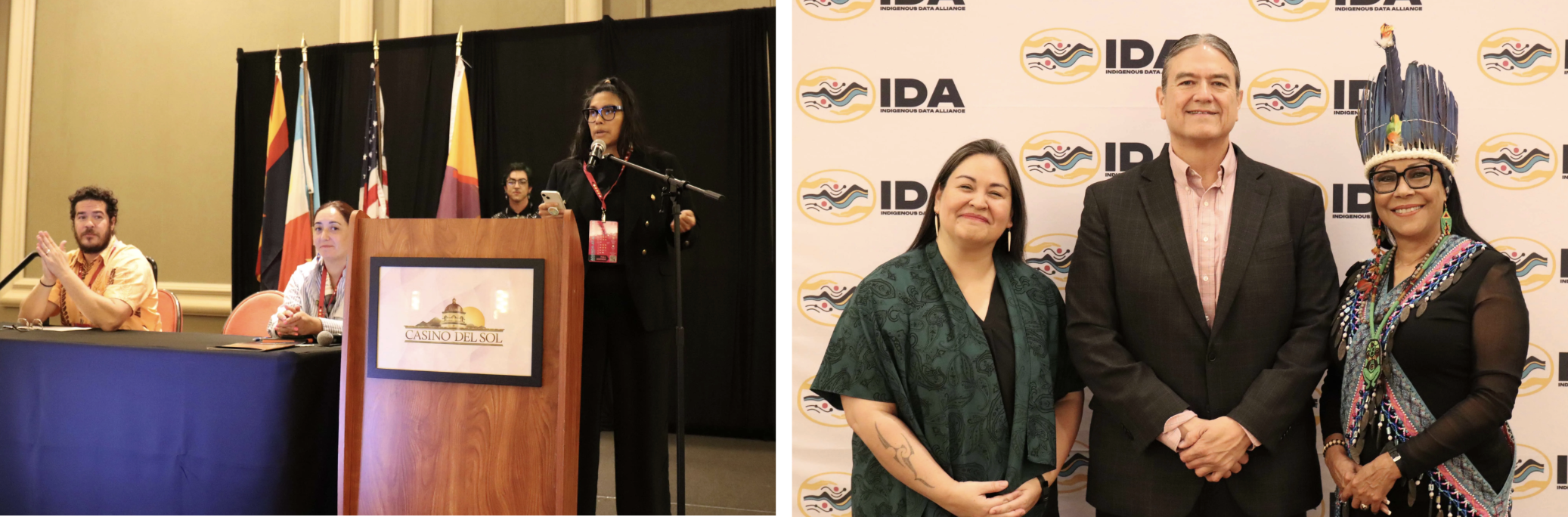
Left image: AI panel speakers Keolu Fox, Kirikowai Mikaere, and Tana Fitzpatrick. Right image: IDA Board of Directors Malia Villegas, Donald Warne, and Tai Pelli.
Looking Back, Walking ForwardElder, Dr. Joseph Suina (Cochiti Pueblo), led the rallying call on the final day of the Summit by reflecting on life before electricity came to his Pueblo in the 1950’s and the lasting effects, good and bad, this technology brought, and how Artificial Intelligence presents a similar challenge today. He urged caution with the use of AI because it can be another tool to challenge our knowledge and tradition. He stressed how data governance and protections that align with our core values are even more important today.
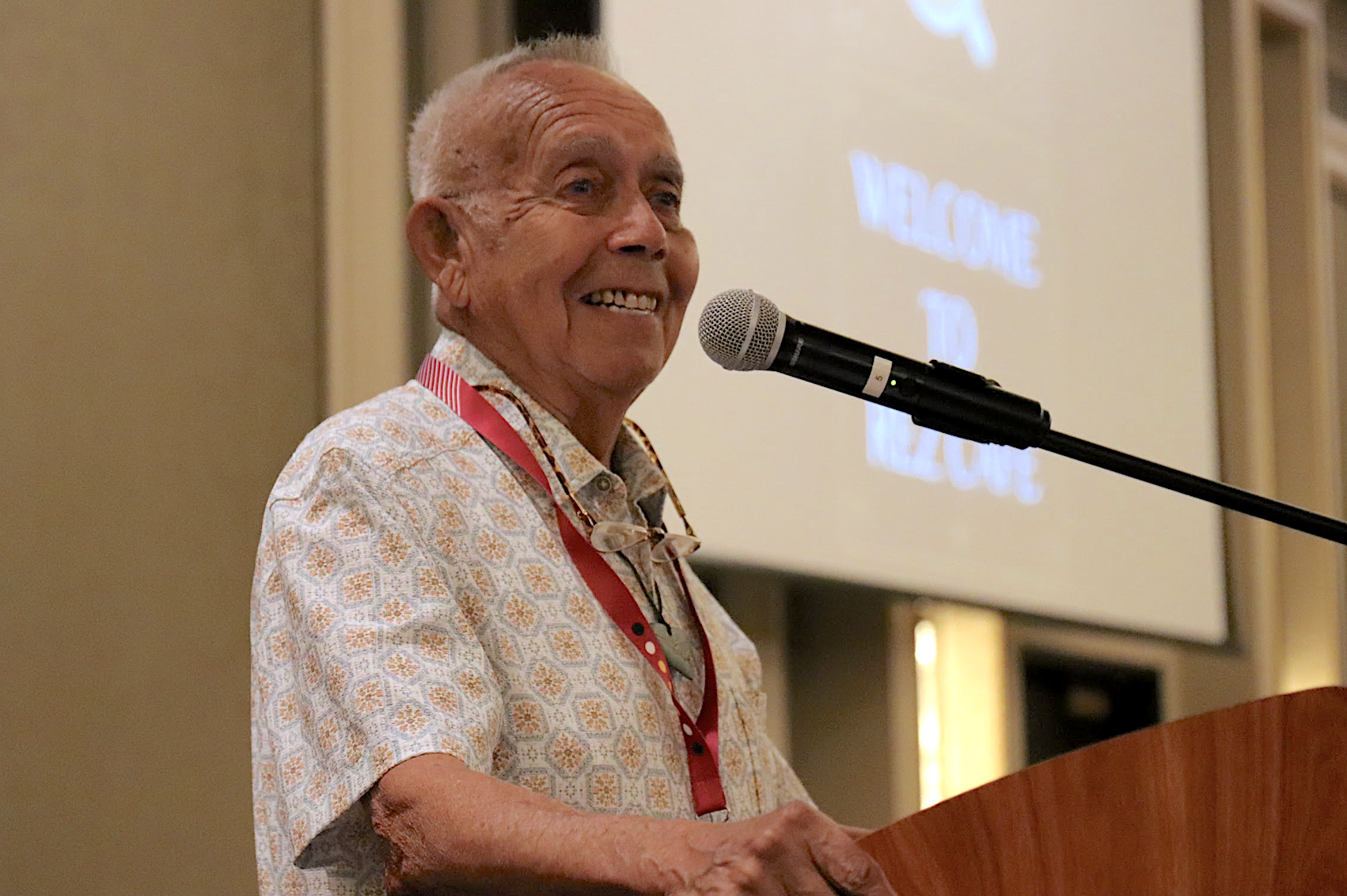
Elder, Dr. Joseph Suina (Cochiti Pueblo), addressing Summit participants.
Participants then engaged in a Rez Café session facilitated by Dr. Michele Suina. The Rez Café, based on the World Café method, is a format used to engage small to large groups in meaningful dialogue about what matters most to them. This facilitated method involves participants in focused conversations that strengthen relationships and understandings on a given topic.
The Rez Café focused on IDGov strategies developed by and for Indigenous Peoples. The session provided an opportunity for attendees to reflect on key takeaways from the Summit and to discuss priorities for advancing IDGov within their communities. Discussions highlighted a shared commitment to strengthening IDSov and emphasized a shift from viewing data solely as information or statistics and instead toward understanding data as relatives.
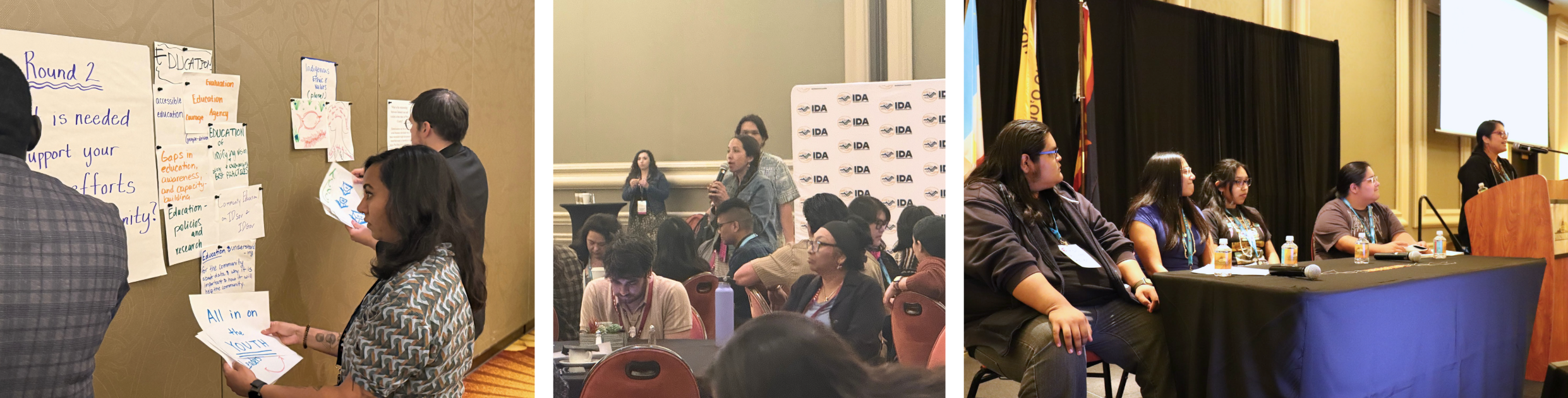
Participants identified several priorities for supporting IDGov efforts, including Indigenous-led governance structures, Tribal Institutional Review Boards, workforce development, AI literacy, and investment in Indigenous-controlled data infrastructure. Conversations also underscored the importance of engaging with emerging technologies in ways that align with Indigenous values, including rest, wellbeing, and sustainability. The day wrapped up with a panel of high school students reflecting on IDSov, their learnings from the Summit, and what they see as their role in IDGov going forward.
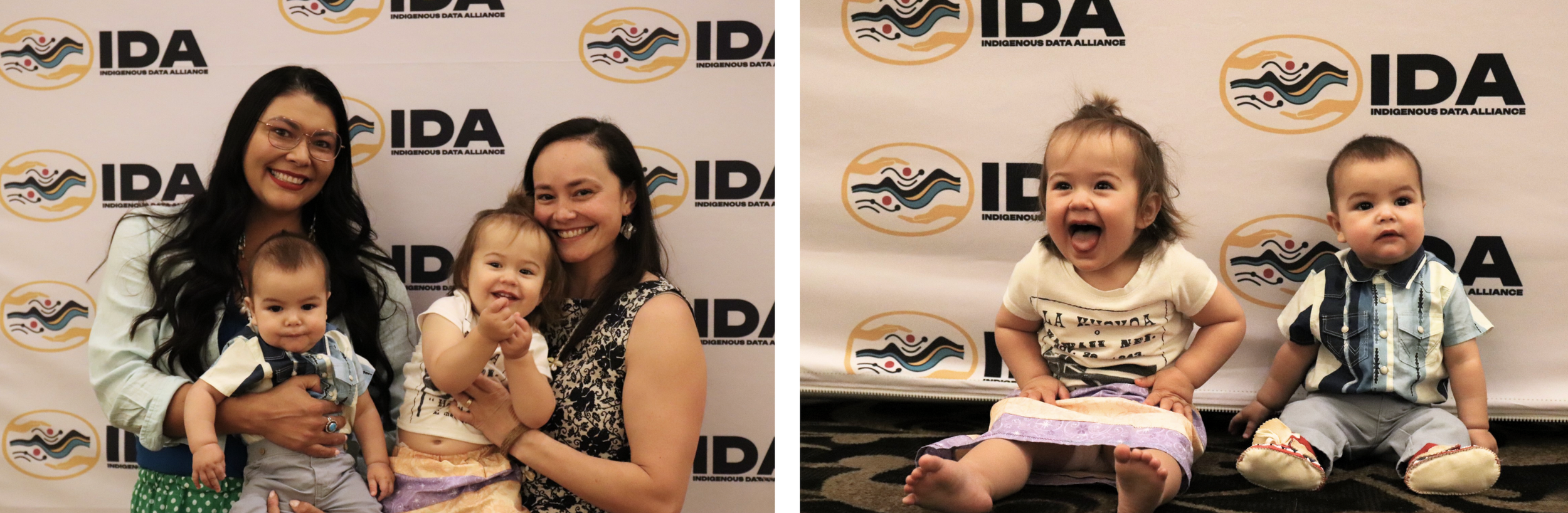
IDA co-founders, Dr. Desi Small-Rodriguez and Dr. Riley Taitingfong with the Summit’s youngest Data Warriors.
Read more about the 2026 SummitNative News Online, “As data becomes a strategic asset, Native leaders face a new sovereignty test” (leading up to the summit)
UA Native Nation’s Institute, “Second U.S. Indigenous Data Sovereignty Summit Encourages Scholars, Leaders, and Data Warriors to ‘Come Home’" by Craig Baker (summit recap)
Native News Online, “Data Control Will Shape the Next Phase of Tribal Sovereignty” by Levi Rickert (summit recap)
Blog Article, “The Case for Data Sovereignty and Design” by Mark Trahant (summit recap)
Indigenous House YouTube Episode, “Before the Algorithms: The Hidden Data Science of Native Communities” ft. Abigail Echo Hawk
Relational Science podcast with summaries on each summit day
Closing RemarksThe Summit Team thanks the many volunteers from the Indigenous Data Champions Fellows, Indigenous DataSET Fellows, the Indigenous Data Exchange International IDSov Scholars, and many others who contributed to the event.
The 2026 IDSov & IDGov Summit was produced by the Indigenous Data Alliance, the United States Indigenous Data Sovereignty Network, the Collaboratory for Indigenous Data Governance, the Data Warriors Lab, the Albuquerque Area Southwest Tribal Epidemiology Center, the Colorado State University Forest and Rangeland Stewardship Program, the Harvard Kennedy School Project of on Indigenous Governance and Development, the Indigenous Land and Data Stewards Lab, the NativeBio Data Consortium, the Sovereign Soils Research Collaborative, the University of Arizona Indigenous Resilience Center, the University of Arizona Udall Center for Studies in Public Policy, and the University of New Mexico Native American Budget and Policy Institute.
Sponsored by the Urban Indian Health Institute, the Henry Luce Foundation, the Nature Conservancy, IllumiNative, the University of Arizona Udall Center for Studies in Public Policy, the American Indian College Fund, the MacArthur Foundation, First Nations Development Institute, Local Contexts, NativeBio Data Consortium, Bowman Performance Consulting, the Harvard Kennedy School Project of on Indigenous Governance and Development, the University of Arizona Agnese Nelms Haury Program, the University of Arizona Indigenous Resilience Center, Kamehameha Schools, Center for Collaborative Conservation, the Pascua Yaqui Tribe Division of Health Services, We All Count, Cultural Survival, Native American Agriculture Fund, Wise Ancestors, and the Paleontological Society.
The IDSov and IDGov Summit will return in 2028.
Follow & Stay Updated